Product Description
HangZhou QY Precision Co., Ltd
QY Precision specializes in design and production of high precision metal parts and components. Focus on industry and action on demand, to be your trusted partner is our mission.
Detailed Photos
Custom Worm Gear Curved Hard Tooth Surface Stainless Steel Worm Gear
Product Description
Gear Introduction
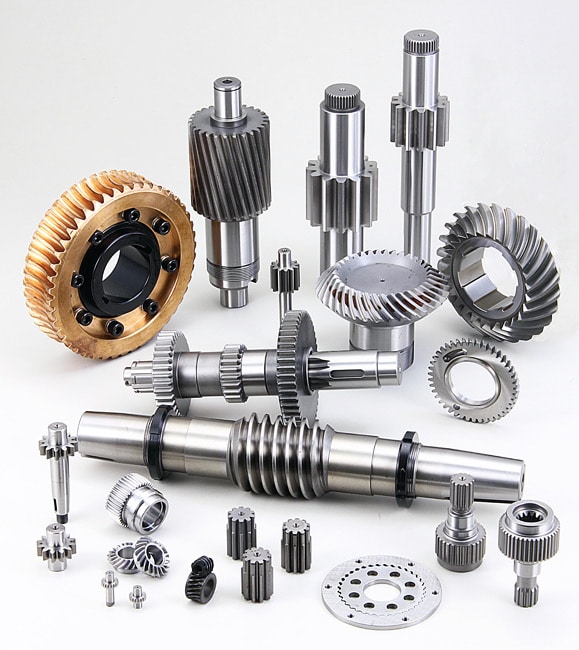
Bevel Gears
Bevel gears are most commonly used to transmit power between shafts that intersect at a 90 degree angle. They are used in applications where a right angle gear drive is required. Bevel gears are generally more costly and are not able to transmit as much torque, per size, as a parallel shaft arrangement.
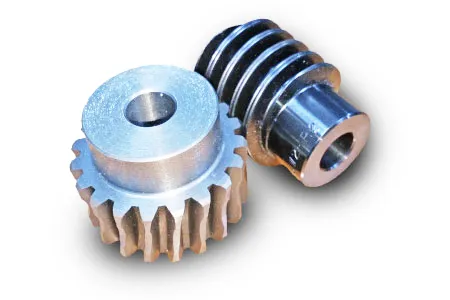
Worm Gear
Worm gears transmit power through right angles on non-intersecting shafts. Worm gears produce thrust load and are good for high shock load applications but offer very low efficiency in comparison to the other gears. Due to this low efficiency, they are often used in lower horsepower applications.
Helical Gears
Helical gears have teeth that are oriented at an angle to the shaft, unlike spur gears which are parallel. This causes more than 1 tooth to be in contact during operation and helical gears can carry more load than spur gears. Due to the load sharing between teeth, this arrangement also allows helical gears to operate smoother and quieter than spur gears. Helical gears produce a thrust load during operation which needs to be considered when they are used. Most enclosed gear drives use helical gears.
Spur Gears
Spur gears transmit power through shafts that are parallel. The teeth of the spur gears are parallel to the shaft axis. This causes the gears to produce radial reaction loads on the shaft, but not axial loads. Spur gears tend to be noisier than helical gears because they operate with a single line of contact between teeth. While the teeth are rolling through mesh, they roll off of contact with 1 tooth and accelerate to contact with the next tooth. This is different than helical gears, which have more than 1 tooth in contact and transmit torque more smoothly.
Hypoid Gears
Hypoid gears look very much like a spiral bevel gear, but unlike spiral bevel gears, they operate on shafts which do not intersect. In the hypoid arrangement because the pinion is set on a different plane than the gear, the shafts are supported by the bearings on either end of the shaft.
Herringbone Gears
Herringbone gears are very similar to the double helical gear, but they do not have a gap separating the 2 helical faces. Herringbone gears are typically smaller than the comparable double helical and are ideally suited for high shock and vibration applications. Herringbone gearing is not used very often due to their manufacturing difficulties and high cost.
Specification:
| Services | CNC Milling, CNC Turning, Wire EDM Cutting, 3D Printing,Vacuum Casting,Reaction Injection Molding, Plastic CNC Machining, Laser, Cutting, Stamping Parts, Bending Parts |
| Material | Metal: Aluminum , Copper , Brass , Steel, Stainless Steel, Titanium and etc. |
| Plastic: ABS, POM, PP, PU, PC,PA66, PMMA, PVC, PVE, Nylon and etc. | |
| Surface treatment | Anodizing, Sandblasting, Metal Plating, Polishing, Painting, Powder coating, Brushing ,Silk-screen , Laser Engraving etc. |
| Heat treatment | Annealing, Normalizing , Nitriding, Tempering |
| File Formats | STP, STEP, IGS,STP,X_T ,DXF,DWG , Pro/E, PDF, SLDPRT |
| Inspection | In-house or third party, all the products are strictly inspected by skilled QC |
| Service Type | OEM & ODM Service |
Surface Finish:
Available Material:
FAQ
1.How to get a quote?
Kindly send us the drawing of your product,please. Including details as below: a.Materials b. Surface Finish c. Tolerance d. Quantity If you need solutions for your application, kindly send us your detail requirements, and we will have engineers to service you.
2.How does the payment process work?
Payment terms are flexible for us. We can accept different type payment way.
3.How do I know about the production?
We will double confirm your requirements and send you the sample before the mass production as you required. During the mass production,
4.How do I know about the delivery?
Before shipment we will confirm with you about all the details including CI and other attention issues. After ship out, we will inform you of the tracking number and keep updating the latest shipping information for you.
5.What will you do for after sales?
We will follow up and await your feedback. Any question related to our metal parts, our experienced engineers are ready to help. And welcome to contact for any supporting of your other application even if their is no relationship with our products.
Packaging & Shipping
| Application: | Fastener, Auto and Motorcycle Accessory, Hardware Tool, Machinery Accessory, Robotics |
|---|---|
| Standard: | GB, EN, API650, China GB Code, JIS Code, TEMA, ASME, CE, FCC, RoHS, ISO9001:2008 |
| Surface Treatment: | Anodizing |
| Samples: |
US$ 0/Piece
1 Piece(Min.Order) | Order Sample |
|---|
| Customization: |
Available
| Customized Request |
|---|
.shipping-cost-tm .tm-status-off{background: none;padding:0;color: #1470cc}
|
Shipping Cost:
Estimated freight per unit. |
about shipping cost and estimated delivery time. |
|---|
| Payment Method: |
|
|---|---|
|
Initial Payment Full Payment |
| Currency: | US$ |
|---|
| Return&refunds: | You can apply for a refund up to 30 days after receipt of the products. |
|---|
What lubrication is required for a worm gear?
The lubrication requirements for a worm gear system are crucial to ensure smooth operation, reduce friction, prevent wear, and extend the lifespan of the gears. The specific lubrication needed may vary depending on factors such as the application, operating conditions, gear materials, and manufacturer recommendations. Here are some key considerations regarding lubrication for a worm gear:
- Lubricant selection: Choose a lubricant specifically designed for gear applications, taking into account factors such as load, speed, temperature, and environment. Common lubricant types for worm gears include mineral oils, synthetic oils, and greases. Consult the gear manufacturer’s recommendations or industry standards to determine the appropriate lubricant type and viscosity grade.
- Viscosity: The lubricant viscosity is critical for effective lubrication. The viscosity should be selected based on the operating conditions and gear design parameters. Higher loads and slower speeds typically require higher viscosity lubricants to ensure sufficient film thickness and protection. Conversely, lower viscosity lubricants may be suitable for lighter loads and higher speeds to minimize power losses.
- Lubrication method: The lubrication method can vary depending on the gear system design. Some worm gears have oil sumps or reservoirs that allow for oil bath lubrication, where the gears are partially submerged in a lubricant pool. Other systems may require periodic oil application or greasing. Follow the gear manufacturer’s guidelines for the appropriate lubrication method, frequency, and quantity.
- Temperature considerations: Worm gear systems may encounter a wide range of temperatures during operation. Ensure that the selected lubricant can withstand the anticipated temperature extremes without significant degradation or viscosity changes. Extreme temperatures may require specialized high-temperature or low-temperature lubricants to maintain proper lubrication performance.
- Maintenance and monitoring: Regular maintenance and monitoring of the lubrication are essential for optimal gear performance. Periodically inspect the lubricant condition, including its cleanliness, viscosity, and contamination levels. Monitor operating temperatures and perform oil analysis if necessary. Replace the lubricant at recommended intervals or if signs of degradation or contamination are observed.
It’s important to note that the lubrication requirements may vary for different worm gear applications, such as automotive, industrial machinery, or marine systems. Additionally, environmental factors such as dust, moisture, or chemical exposure should be considered when selecting a lubricant and establishing a lubrication maintenance plan.
Always refer to the gear manufacturer’s recommendations and guidelines for the specific lubrication requirements of your worm gear system. Adhering to proper lubrication practices helps ensure smooth and reliable operation, minimizes wear, and maximizes the gear system’s longevity.
How do you calculate the efficiency of a worm gear?
Calculating the efficiency of a worm gear involves analyzing the power losses that occur during its operation. Here’s a detailed explanation of the process:
The efficiency of a worm gear system is defined as the ratio of output power to input power. In other words, it represents the percentage of power that is successfully transmitted from the input (worm) to the output (worm wheel) without significant losses. To calculate the efficiency, the following steps are typically followed:
- Measure input power: Measure the input power to the worm gear system. This can be done by using a power meter or by measuring the input torque and rotational speed of the worm shaft. The input power is usually denoted as Pin.
- Measure output power: Measure the output power from the worm gear system. This can be done by measuring the output torque and rotational speed of the worm wheel. The output power is usually denoted as Pout.
- Calculate power losses: Determine the power losses that occur within the worm gear system. These losses can be classified into various categories, including:
- Mechanical losses: These losses occur due to friction between the gear teeth, sliding contact, and other mechanical components. They can be estimated based on factors such as gear design, materials, lubrication, and manufacturing quality.
- Bearing losses: Worm gears typically incorporate bearings to support the shafts and reduce friction. Bearing losses can be estimated based on the bearing type, size, and operating conditions.
- Lubrication losses: Inadequate lubrication or inefficient lubricant distribution can result in additional losses. Proper lubrication selection and maintenance are essential to minimize these losses.
- Calculate efficiency: Once the power losses are determined, the efficiency can be calculated using the following formula:
Efficiency = (Pout / Pin) * 100%
The efficiency is expressed as a percentage, indicating the proportion of input power that is successfully transmitted to the output. A higher efficiency value indicates a more efficient gear system with fewer losses.
It is important to note that the efficiency of a worm gear can vary depending on factors such as gear design, materials, lubrication, operating conditions, and manufacturing quality. Additionally, the efficiency may also change at different operating speeds or torque levels. Therefore, it is advisable to consider these factors and conduct efficiency calculations based on specific gear system parameters and operating conditions.
What are the applications of a worm gear?
A worm gear is a type of gear mechanism that consists of a threaded worm and a mating gear, known as the worm wheel or worm gear. It is widely used in various applications where a high gear ratio and compact size are required. Here are some specific applications of worm gears:
- Elevators and Lifts: Worm gears are extensively used in elevator and lift systems. They provide the necessary gear reduction to lift heavy loads while maintaining smooth and controlled vertical movement.
- Steering Systems: Worm gears are commonly found in automotive steering systems. They convert the rotational motion of the steering wheel into the linear motion required to turn the vehicle’s wheels.
- Conveyors: Worm gears are employed in conveyor systems, particularly for applications that require moving materials at an inclined angle. They offer the necessary torque and control for efficient material handling.
- Machine Tools: Worm gears are used in machine tools such as milling machines, lathes, and grinders. They enable precise control over the machine’s speed and feed rate, resulting in accurate machining operations.
- Packaging Equipment: Worm gears are utilized in packaging machinery to drive various components such as conveyor belts, rotary tables, and filling mechanisms. They ensure synchronized and efficient packaging processes.
- Rotary Actuators: Worm gears find applications in rotary actuators, which are used in robotics, industrial automation, and valve control. They provide precise positioning and torque output for rotational movements.
- Textile Machinery: Worm gears are employed in textile machinery for applications like yarn winding, loom mechanisms, and fabric tensioning. They ensure smooth and controlled movement of threads and fabrics.
- Raising and Lowering Mechanisms: Worm gears are used in raising and lowering mechanisms, such as those found in stage platforms, scissor lifts, and adjustable workbenches. They enable controlled vertical movement with high load capacity.
These are just a few examples of the applications of worm gears. Their unique characteristics, including high gear reduction ratios, compact size, and self-locking capabilities, make them suitable for a wide range of industries and mechanical systems.


editor by CX 2023-10-17